EN
EN
What is Aluminum Profile and How Does It Work?
2026/09/30
Source aluminum profiles for versatile modular framing. Learn extrusion mechanics, strength benefits & corrosion resistance. Request details.

2026/09/24
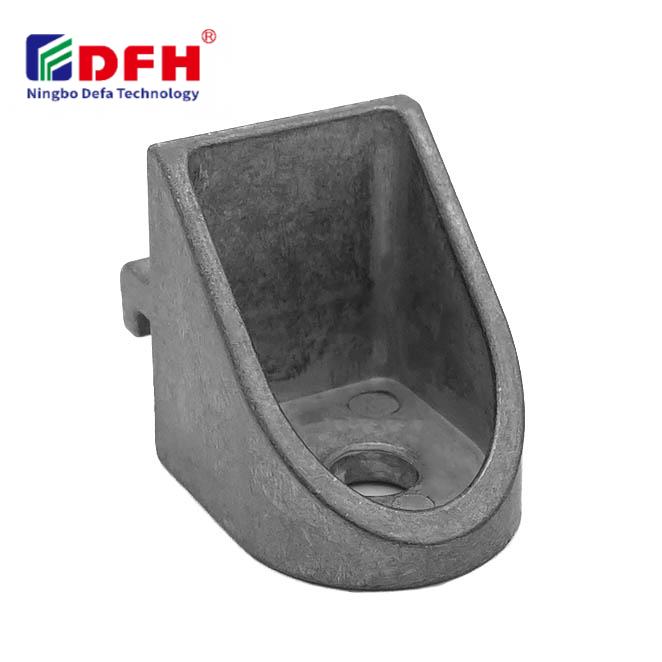
Frame assembly stands as a critical process across manufacturing, construction, and industrial applications. The choice of fastening components directly influences structural integrity, assembly speed, and long-term performance. Angle connectors have emerged as the preferred solution for professionals who demand reliability and precision in their frame construction projects. Understanding why angle connectors matter can transform how you approach frame design and assembly efficiency.
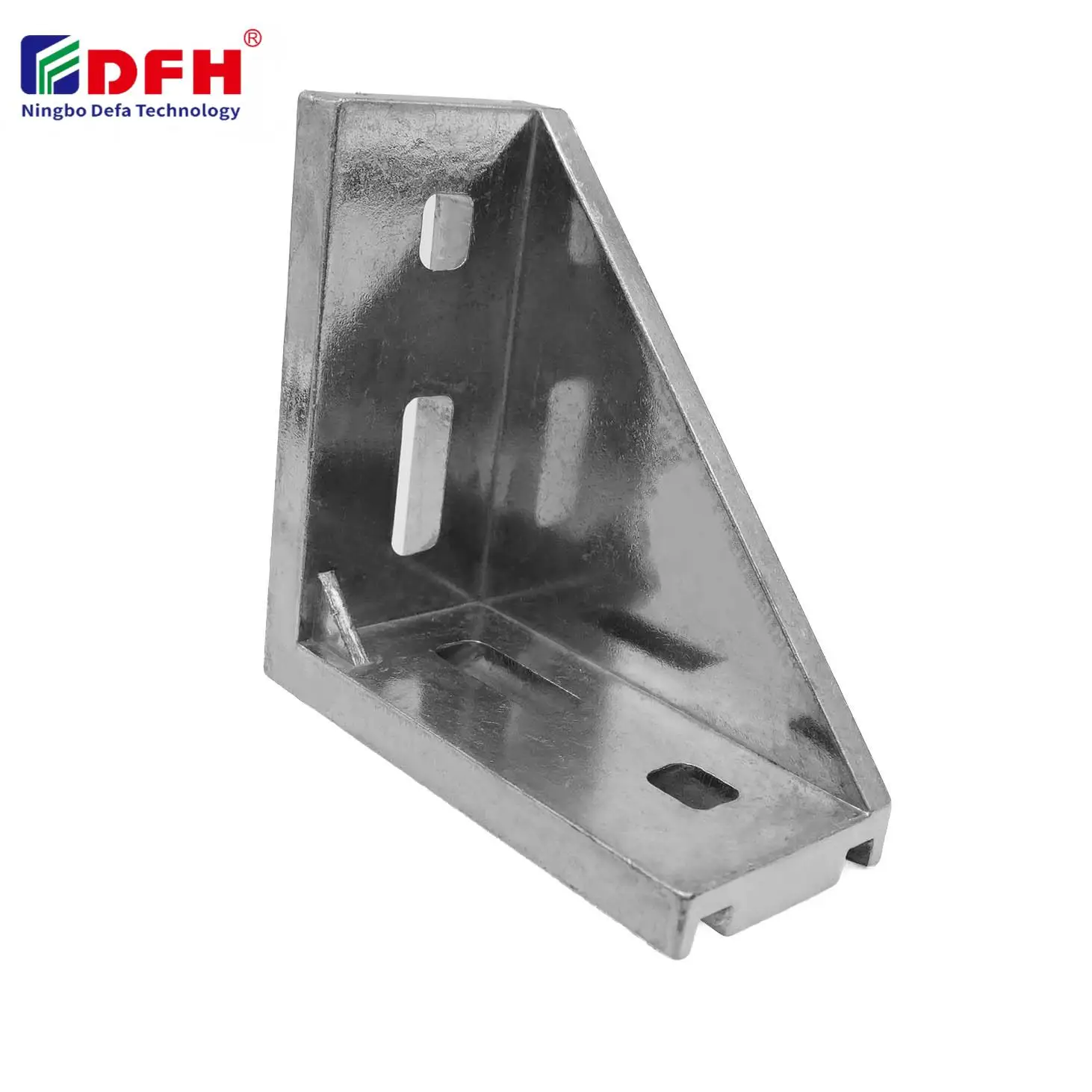
The strategic application of angle connectors within frame systems delivers measurable advantages in structural performance, assembly workflow, and maintenance accessibility. These components provide consistent support at critical junctures where two frame members meet at perpendicular angles. By selecting the right fastening solution, engineers and fabricators optimize both immediate assembly outcomes and the durability of finished assemblies.
Right angle brackets function as load-bearing reinforcement at frame intersections. When two structural members meet at 90 degrees, the junction naturally experiences stress concentration. Properly installed angle connectors distribute this stress across a wider surface area, preventing localized failures and extending the operational life of the assembled structure. The geometric design of corner fasteners ensures that lateral forces, vertical loads, and torsional stress are managed through multiple connection points rather than a single fastening location.
The material composition of 90 degree joints significantly influences their load-carrying capacity. Aluminum angle connectors provide an excellent balance of strength-to-weight ratio, corrosion resistance, and ease of assembly. Steel variants offer maximum strength for heavy-duty industrial applications. Both options maintain dimensional stability under operational stress, preventing flex or misalignment that could compromise the integrity of the finished frame assembly.
Frame deflection represents a common failure mode in poorly designed assemblies. Without adequate support at corner points, frames gradually shift out of square, leading to operational problems, premature wear, and potential safety hazards. Angle connectors actively resist this deflection by creating rigid connections at 90 degree angles. The distributed fastening points characteristic of corner fasteners prevent the racking and twisting that undermines frame performance over time.
Misalignment issues disappear when angle connectors are incorporated into the frame design from the initial planning stage. These components ensure that frame members maintain their intended perpendicular relationship throughout the assembly process and beyond. This precision matters enormously in automated systems, precision machinery, and any application where dimensional accuracy translates directly to end-product quality.
The modular design of right angle brackets dramatically reduces assembly time compared to traditional welding or complex fastening methods. Fabricators and assembly technicians can quickly position frame members, insert angle connectors, and secure everything using standard fasteners. This plug-and-play approach minimizes skilled labor requirements and reduces the overall assembly duration. Corner fasteners come pre-engineered to accept standard fastener sizes, eliminating guesswork and reducing assembly errors.
Documentation and training become far simpler when using standardized 90 degree joints. Assembly teams need only understand a few straightforward steps rather than mastering complex welding techniques or specialized fastening procedures. This consistency translates into faster onboarding for new employees and fewer quality-related rework cycles. Organizations that standardize on angle connectors typically report assembly time reductions of 20 to 40 percent compared to conventional methods.
Unlike welded joints, frames assembled with angle connectors remain fully modular and reconfigurable. When maintenance requirements arise or frame modifications become necessary, technicians can easily remove fasteners and reposition or replace individual components without damaging surrounding structure. This flexibility proves invaluable in environments where frames must be adapted to changing production requirements or where maintenance needs evolve over time.
The accessibility provided by corner fasteners extends the practical lifespan of frame assemblies. Components can be inspected, cleaned, lubricated, or replaced without dismantling the entire structure. This maintainability aspect often justifies the initial investment in angle connectors by reducing long-term operational costs and minimizing downtime associated with frame-related issues.
Standardized angle connectors reduce material waste significantly compared to custom-fabricated solutions. Organizations that embrace right angle brackets as their standard joining method can work from pre-manufactured components with predictable performance characteristics. This approach eliminates the scrap generated by custom cutting, welding, and finishing operations. Inventory management becomes more straightforward when only a few standard 90 degree joint configurations need to be maintained.
Volume purchasing of corner fasteners and compatible fasteners creates additional cost advantages. As suppliers recognize consistent demand for specific angle connector sizes and specifications, they typically offer competitive pricing for bulk orders. This economic benefit compounds across production cycles, making the total cost of ownership for angle connector-based assemblies substantially lower than alternatives requiring customization.
Mass-produced angle connectors meet rigorous quality standards established by manufacturers and industry specifications. Each component undergoes inspection and testing before shipment, ensuring consistent dimensional accuracy and material properties. This standardization eliminates the variability inherent in custom-made fastening solutions. Assembly teams can confidently expect identical performance from every right angle bracket used in frame construction.
Quality predictability extends beyond individual fasteners to encompass entire frame assemblies. When angle connectors comply with established standards and tolerances, engineers can reliably model frame performance using established engineering calculations. This confidence in material behavior streamlines design validation, accelerates approval cycles, and reduces the probability of unexpected failures in the field.
90 degree joints provide superior modularity compared to welded connections, allowing for easy disassembly and reconfiguration throughout the frame assembly lifecycle. Welded joints are permanent and require specialized skills; corner fasteners use standard fastening procedures that most technicians understand. Additionally, welded frames generate heat-affected zones that can compromise material properties, while angle connectors maintain the original strength characteristics of both the frame members and the connector itself. The elimination of welding also removes quality variability associated with operator skill variation.
Right angle brackets are precision-engineered to maintain exact 90-degree angles at connection points. When properly installed with fasteners tightened to specification, angle connectors lock frame members into their intended perpendicular relationship. This rigid positioning prevents the gradual drift and misalignment that occurs with less robust fastening methods. The distributed fastening pattern of corner fasteners further enhances dimensional stability by eliminating single-point stress concentrations that could cause localized deflection.
Yes, angle connectors are available in multiple material grades and sizes to accommodate diverse load requirements. Aluminum 90 degree joints suit applications with moderate loads and where weight reduction matters, such as automation equipment and laboratory frameworks. Steel angle connectors handle heavy industrial applications involving substantial dynamic loads, such as material handling systems and structural support frames. The versatility of this fastening approach makes it suitable across manufacturing sectors and application intensity ranges.
2026/09/30
Source aluminum profiles for versatile modular framing. Learn extrusion mechanics, strength benefits & corrosion resistance. Request details.
2026/09/30
Source aluminum profiles for construction projects. Learn structural framing, cladding & window benefits for maximum ROI. Download guide.
2026/09/30
Source optimal aluminum profile sizing techniques. Evaluate load, space, alloy, environment & cost factors to prevent deflection. Download guide.
2026/09/30
Struggling with fastener failures or rework? Master screw sizing by diameter, pitch, material, and load—plus industry-specific standards. Optimize reliability & compliance now.
2026/09/30
Source aluminum profiles for industrial engineering. Discover strength-to-weight ratios, corrosion resistance & 30% cost savings. Download guide.
2026/09/30
Source heat-resistant aluminum profile systems. Master thermal expansion science & stress management strategies for industrial builds. Download guide.