EN
EN
What is Aluminum Profile and How Does It Work?
2026/09/30
Source aluminum profiles for versatile modular framing. Learn extrusion mechanics, strength benefits & corrosion resistance. Request details.

2026/09/09
End connectors represent a critical component in any industrial assembly or electrical system, serving as the physical interface where power, signal, or data transfer occurs between cable and equipment. Understanding the load capacity and safety ratings that apply to end connectors is essential for engineers, procurement professionals, and manufacturers who must select appropriate connection hardware for their specific applications. These ratings determine not only whether a connector will function reliably but also whether your entire system meets regulatory compliance and operational safety standards.
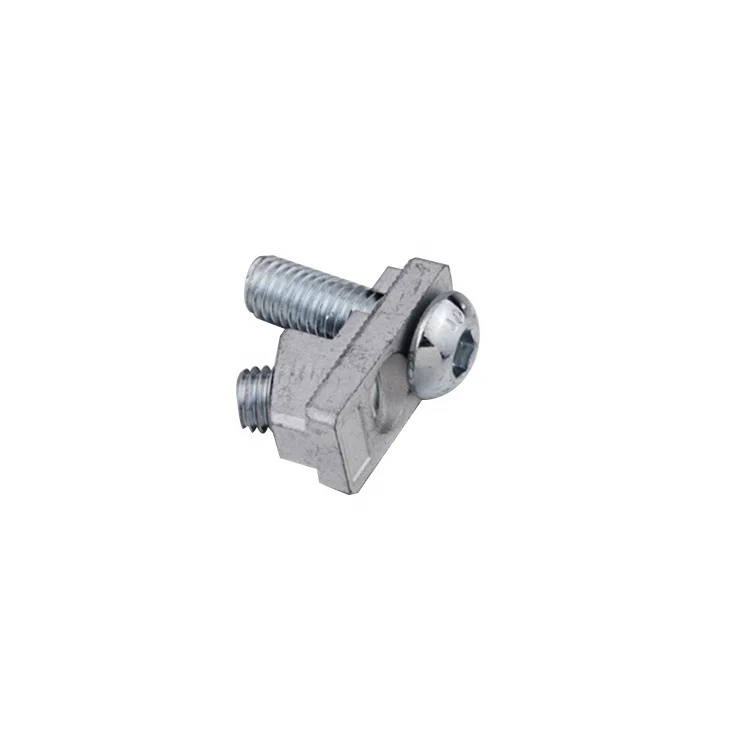
The specifications governing end connectors encompass multiple dimensions, including electrical current capacity, mechanical strength, temperature tolerances, and environmental resistance. Each of these factors directly influences the maximum load a connector can safely handle without degradation, failure, or safety risk. Industrial applications demand precision in these calculations because undersized connector terminals can lead to overheating, arcing, and system failure, while oversized specifications waste cost and space. This guide explores the core ratings, how they are determined, and how to apply them effectively in your selection process.
The electrical load capacity of end connectors is typically specified in amperes and represents the maximum continuous current the connector can carry without exceeding temperature rise limits. This rating depends on contact material, contact area, plating thickness, and the connector's thermal design. Cable end connectors must be rated to handle not only the nominal operating current but also transient surges and peak loads that may occur during equipment startup or fault conditions. Manufacturers test these ratings under controlled conditions, applying standard load profiles and measuring temperature rise across contact interfaces.
The relationship between current capacity and temperature is nonlinear and must account for ambient environmental conditions. If an end connector is rated for 50 amperes at 20 degrees Celsius ambient temperature, its actual safe current capacity may be reduced significantly in hot industrial environments. Selection must therefore incorporate a safety margin and derating factors that account for your specific operating environment. Connector terminals with inadequate current ratings will experience premature degradation, increasing contact resistance and generating excessive heat that accelerates aging of both the connector and attached cables.
Beyond electrical specifications, mechanical load capacity determines how much physical stress an end connector can withstand without fracture, deformation, or internal damage. This includes tensile pull forces on the connector body, bending moments on protruding pins or tabs, and shear forces during mating or unmating cycles. Connection hardware is typically rated for specific mechanical pull forces measured in pounds or Newtons, with higher quality industrial connectors capable of withstanding 500 to 2000 pounds or more depending on connector type and size.
Mechanical load ratings become especially critical in aerospace, automotive, and heavy equipment applications where vibration, thermal cycling, and physical handling create repeated stress on connector interfaces. Cable end connectors must maintain contact integrity under these conditions, as even micro-movements can increase contact resistance and generate intermittent connection faults. Industrial standards specify minimum tensile test procedures and acceptable stress levels to ensure connectors remain reliable throughout their operational lifetime, typically rated for tens of thousands of mating cycles without performance degradation.
End connectors and connector terminals must comply with internationally recognized standards that define testing procedures, safety margins, and performance criteria. Standards such as IEC 61076, MIL-DTL-38999, UL 2238, and DIN 43650 establish baseline requirements for electrical connectors across different industries. These standards specify how load capacity is measured, what safety factors must be applied, and how temperature derating curves are calculated. Manufacturers publish detailed specification sheets that align with these standards, allowing engineers to make informed selection decisions based on standardized performance metrics.
Understanding which standards apply to your application is fundamental to connector selection. Medical devices, for example, may require compliance with specific electrical safety standards beyond those demanded in industrial manufacturing. Automotive connectors must meet automotive-specific standards that account for temperature extremes, moisture, and vibration unique to vehicle environments. Connection hardware used in hazardous locations such as oil refineries or chemical plants must meet additional certification requirements ensuring they will not create ignition risks under fault conditions.
Safety factors embedded within end connector ratings protect against unexpected load conditions, manufacturing variations, and degradation over time. A connector with a stated load capacity of 100 amperes may have been tested to 150 amperes or higher to establish a safety margin of 50 percent or more. These margins account for contact resistance variations, temperature fluctuations, and the cumulative effects of thermal cycling on connector materials. Cable end connectors are intentionally overdesigned beyond nominal requirements to ensure reliability when real-world operating conditions deviate from laboratory testing parameters.
Engineers must never operate end connectors at their absolute maximum rated capacity continuously. Best practice dictates operating at 70 to 85 percent of rated capacity to account for real-world uncertainty and to extend connector lifespan. This conservative approach reduces heat generation, minimizes contact degradation, and maintains system safety margins that protect against equipment damage or personnel injury. Connector terminals in mission-critical applications should be selected with even larger safety margins to ensure fault tolerance and system redundancy.
Selecting appropriately rated end connectors begins with accurately calculating your system's actual load requirements. Start by documenting all connected devices, their steady-state power consumption, peak transient loads, startup surge currents, and fault protection thresholds. Connection hardware must accommodate the sum of all these loads plus safety margins. Engineers must also account for environmental factors including ambient temperature, humidity, altitude, and exposure to corrosive atmospheres or vibration that may reduce the effective load capacity of connector terminals.
A practical example illustrates this process: if your application requires 40 amperes continuous current in a 40-degree Celsius ambient environment, you would select cable end connectors with a base rating significantly higher than 40 amperes. After applying temperature derating curves, you might need connectors rated for 60 amperes or more at 20 degrees Celsius to deliver the required capacity at your operating temperature. This ensures the end connectors operate within safe limits and maintains reliability throughout the expected service life.
Once end connectors have been selected, verification procedures must confirm that installed connection hardware meets all specified requirements. Testing should include verification of electrical continuity, contact resistance measurement under simulated load, thermal imaging during operation, and mechanical pull testing on sample units from production batches. Cable end connectors should be subjected to environmental stress screening that includes temperature cycling, humidity exposure, and vibration testing to identify potential failure modes before the system enters service.
Documentation and traceability become essential when end connectors are deployed in regulated industries or mission-critical applications. Maintain detailed records of connector specifications, batch certifications, test results, and installation photographs that demonstrate compliance with design requirements. This documentation supports audits, troubleshooting investigations, and warranty claims if connector terminals fail prematurely. Regular inspection protocols should also be established to detect signs of connector degradation including discoloration, corrosion, loose contacts, or deformation that might indicate imminent failure.
Contact material composition, surface plating thickness, connector body design, and thermal management features are the primary determinants of end connector load capacity. Cable end connectors made from higher conductivity materials like silver-plated copper can carry more current with lower temperature rise compared to lesser materials. The connector's internal geometry, including contact spacing and thermal pathways, directly influences how effectively heat is dissipated, which in turn affects the maximum allowable electrical load.
Temperature significantly reduces the effective load capacity of connection hardware through thermal derating curves provided by manufacturers. A connector rated for 100 amperes at 20 degrees Celsius ambient might only safely carry 70 amperes at 60 degrees Celsius ambient temperature. High ambient temperatures reduce the connector's ability to dissipate heat generated by electrical resistance, forcing lower current limits to prevent contact melting or material degradation. Engineers must always apply appropriate derating factors based on their specific operating environment when selecting cable end connectors.
Proper installation of end connectors requires clean, dry connections with correct torque specifications to minimize contact resistance and ensure secure mechanical engagement. Cable end connectors should never be forced into mating receptacles, as this can damage internal contacts or deform connector bodies, compromising their rated load capacity. All connection hardware should be installed in accordance with manufacturer guidelines, with periodic inspection to detect looseness, corrosion, or other degradation that might reduce the connector's ability to safely carry rated loads.
2026/09/30
Source aluminum profiles for versatile modular framing. Learn extrusion mechanics, strength benefits & corrosion resistance. Request details.
2026/09/30
Source aluminum profiles for construction projects. Learn structural framing, cladding & window benefits for maximum ROI. Download guide.
2026/09/30
Source optimal aluminum profile sizing techniques. Evaluate load, space, alloy, environment & cost factors to prevent deflection. Download guide.
2026/09/30
Struggling with fastener failures or rework? Master screw sizing by diameter, pitch, material, and load—plus industry-specific standards. Optimize reliability & compliance now.
2026/09/30
Source aluminum profiles for industrial engineering. Discover strength-to-weight ratios, corrosion resistance & 30% cost savings. Download guide.
2026/09/30
Source heat-resistant aluminum profile systems. Master thermal expansion science & stress management strategies for industrial builds. Download guide.