EN
EN
What is Aluminum Profile and How Does It Work?
2026/09/30
Source aluminum profiles for versatile modular framing. Learn extrusion mechanics, strength benefits & corrosion resistance. Request details.
2026/09/18
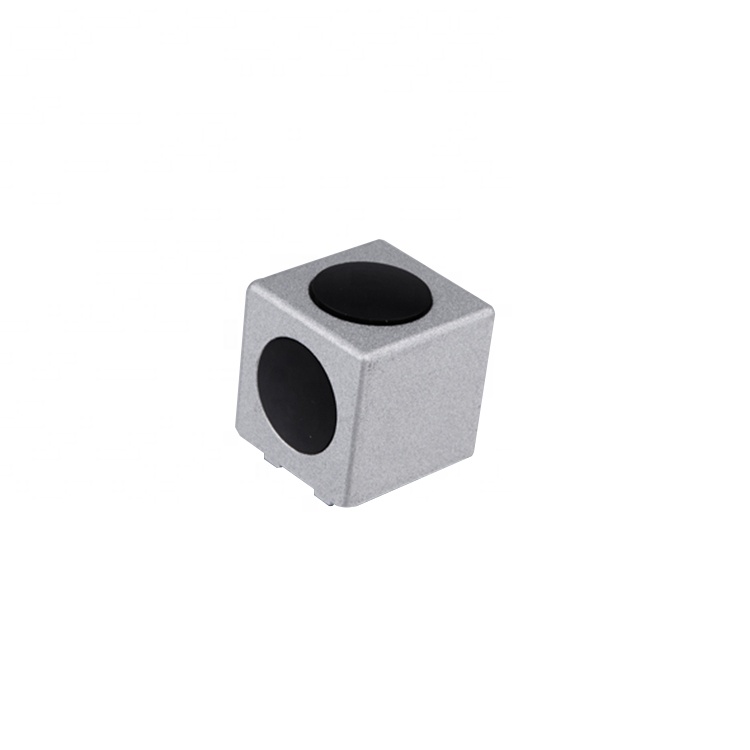
When industrial equipment operates under continuous vibration, the reliability of every component becomes critical. Inner connectors play a vital role in securing structural frameworks and assemblies in demanding environments. Whether these fastening systems can truly withstand high vibration is a question that directly impacts equipment longevity, maintenance costs, and operational safety across manufacturing, automation, and machinery sectors.
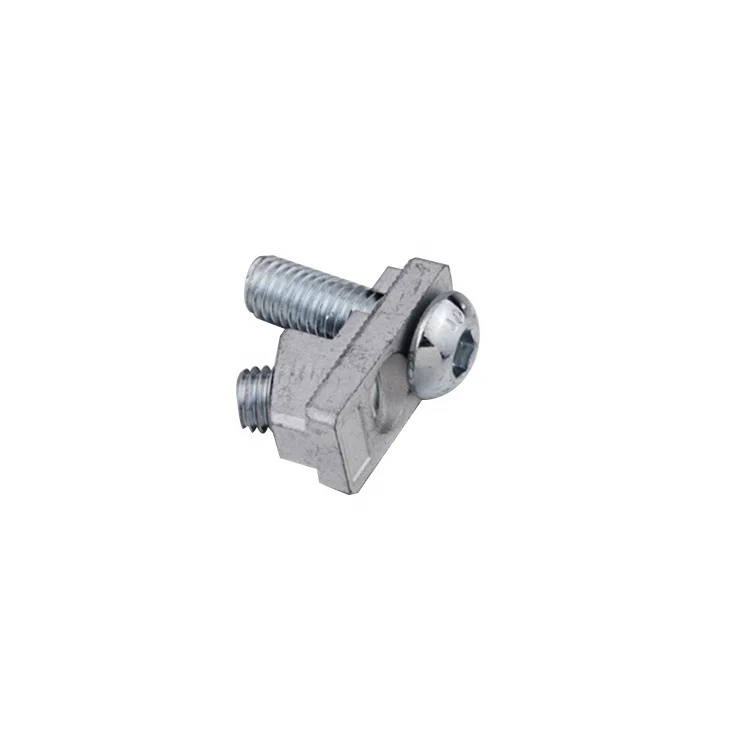
The answer is fundamentally yes, but with important qualifications. Modern Inner Connectors designed for industrial applications incorporate advanced material science, precision engineering, and mechanical principles specifically engineered to resist vibrational stress. However, their actual performance depends on design specifications, material selection, installation quality, and how well the connector matches the specific vibration profile of your application. Understanding these factors ensures your equipment achieves optimal performance and minimal downtime.
Inner connectors manufactured from high-grade steel exhibit exceptional resistance to vibrational forces. Steel's crystalline structure and inherent damping properties absorb and dissipate vibration energy effectively, preventing the micro-movements that cause fatigue failure. Powder metallurgy techniques enhance this performance by creating uniform, defect-free material matrices with consistent density throughout the fastener. This uniformity eliminates weak points where cracks might initiate under cyclic stress, making internal fasteners significantly more reliable in vibration-prone environments.
Advanced surface treatments like nitriding or specialized coatings further improve vibration resistance by increasing surface hardness and reducing friction between the connector and mounting surfaces. These treatments minimize relative movement at connection points, which is a primary mechanism of vibration-induced loosening. When surface-treated internal fasteners are properly installed, they maintain their clamping force even after millions of vibration cycles, delivering the durability industrial operations demand.
Modern inner connectors incorporate sophisticated thread geometries that create stronger load-bearing surfaces and resist rotational loosening under vibration. Slot mounting hardware design specifically complements these fasteners by distributing loads evenly across broader surface areas, reducing concentrated stress points. This synergy between connector thread design and slot mounting hardware ensures that vibrational energy dissipates uniformly rather than concentrating at single failure zones. Profile connection systems leverage this principle by integrating modular slots that accept standardized connectors while maintaining consistent clamping characteristics across multiple assembly points.
Advanced internal fasteners maintain higher preload retention through optimized geometric designs that resist stress relaxation. Many modern systems incorporate micro-locking features or deformed thread sections that grip mating surfaces with greater tenacity. Profile connection systems using quality slot mounting hardware achieve superior vibration stability by maintaining consistent preload over extended operational periods. This sustained clamping force is the fundamental barrier preventing the micro-slipping that leads to loosening and eventual failure in high-vibration environments.
Industrial testing demonstrates that properly specified inner connectors maintain structural integrity through continuous vibration cycles exceeding 10 million cycles at frequencies ranging from 5 Hz to 10 kHz. Machinery operating in automated production lines, transportation systems, and precision equipment encounters exactly these vibration profiles. Profile connection systems specifically designed for these environments show failure rates below 0.1 percent when using quality internal fasteners matched to application specifications. This empirical performance validates that inner connectors do indeed withstand high vibration when engineered appropriately.
Achieving reliable vibration resistance requires matching connector specifications to actual application demands. Factors including vibration frequency, amplitude, temperature cycling, and environmental corrosion all influence connector selection. Profile connection systems offer standardized slot mounting hardware that simplifies this matching process by providing pre-engineered compatibility with quality fasteners. Proper installation techniques, including correct preload application and surface cleanliness, are equally critical. When these factors align, inner connectors consistently deliver the vibration performance that industrial operations require.
Connector failure under vibration typically results from insufficient preload, material defects, poor surface treatment, or mismatched thread geometry. When preload gradually decreases through stress relaxation or surface creep, micro-movements increase and fatigue cracks develop. Lower-quality internal fasteners with inconsistent material composition fail faster than precision-engineered alternatives. Improper installation or failure to match connector specifications to actual vibration profiles significantly increases failure probability.
Profile connection systems enhance vibration durability by providing engineered integration between slot mounting hardware and standardized fasteners. This integration ensures even load distribution, reduces stress concentration, and maintains consistent connection geometry across multiple assembly points. The modular design allows rapid replacement of individual connectors while preserving overall system performance. Quality profile connection systems incorporate damping characteristics that dissipate vibrational energy more effectively than traditional point-loaded connections.
Standard fasteners lack the precision engineering and material specifications required for high-vibration environments. Specialty inner connectors undergo rigorous testing and incorporate advanced designs specifically optimized for vibration resistance. While standard fasteners may function initially, they typically exhibit higher stress relaxation rates, reduced fatigue life, and greater loosening tendency under continuous vibration. Using fasteners specifically engineered for high-vibration duty ensures equipment reliability and minimizes maintenance costs.
2026/09/30
Source aluminum profiles for versatile modular framing. Learn extrusion mechanics, strength benefits & corrosion resistance. Request details.
2026/09/30
Source aluminum profiles for construction projects. Learn structural framing, cladding & window benefits for maximum ROI. Download guide.
2026/09/30
Source optimal aluminum profile sizing techniques. Evaluate load, space, alloy, environment & cost factors to prevent deflection. Download guide.
2026/09/30
Struggling with fastener failures or rework? Master screw sizing by diameter, pitch, material, and load—plus industry-specific standards. Optimize reliability & compliance now.
2026/09/30
Source aluminum profiles for industrial engineering. Discover strength-to-weight ratios, corrosion resistance & 30% cost savings. Download guide.
2026/09/30
Source heat-resistant aluminum profile systems. Master thermal expansion science & stress management strategies for industrial builds. Download guide.