EN
EN
What is Aluminum Profile and How Does It Work?
2026/09/30
Source aluminum profiles for versatile modular framing. Learn extrusion mechanics, strength benefits & corrosion resistance. Request details.

2026/09/24
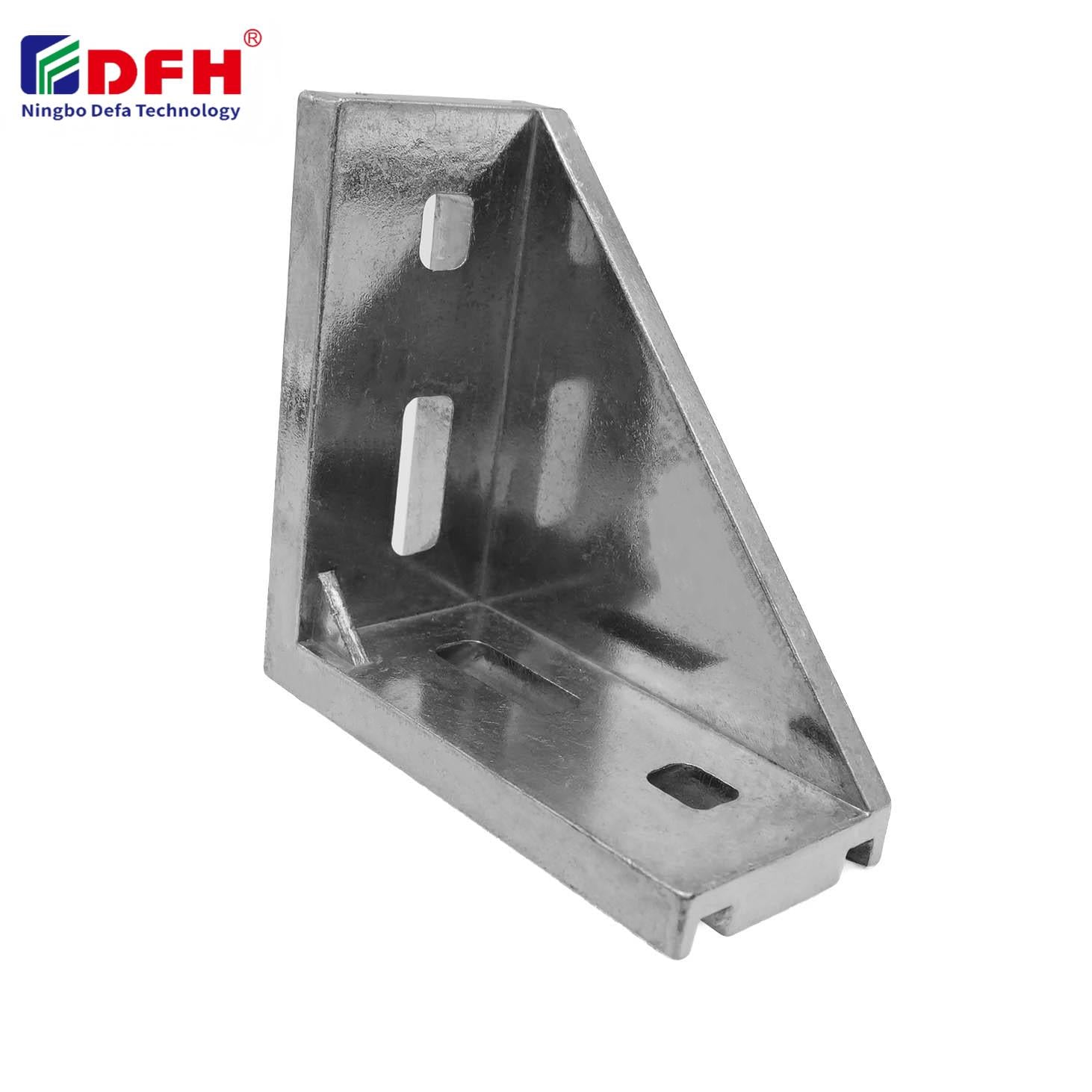
Understanding how to determine Angle Connectors load ratings is essential for anyone designing or constructing structural assemblies. Load ratings represent the maximum force or weight that a connector can safely support before failure occurs. Whether you are working with industrial machinery, framing systems, or modular structures, understanding these ratings ensures safety, compliance, and optimal performance in your application.
Load ratings for right angle brackets and corner fasteners vary significantly based on material composition, geometry, fastener specifications, and connection method. Determining the correct load rating requires analyzing multiple technical factors and consulting engineering data. This guide walks through the key parameters and methods used to evaluate 90 degree joints safely and accurately.
The material composition of your right angle brackets directly influences load capacity. Aluminum connectors offer lightweight solutions with moderate strength, while steel corner fasteners provide superior load-bearing capability. Cast iron options deliver rigidity but add weight. Each material has distinct tensile strength, yield strength, and fatigue properties that determine how much load the connector can handle before yielding or breaking.
When evaluating angle connectors for your application, cross-reference the material grade against published engineering standards. Aluminum alloys like 6061-T6 and 7075-T73 have different strength ratings, as do steel grades such as ASTM A36 or stainless steel 304. The material's ability to resist shear, tension, and compression forces defines the baseline load capacity of 90 degree joints in your assembly.
Corner fasteners experience stress concentration at the bend radius and fastener holes. These stress riser points reduce the effective load capacity below the theoretical maximum based on material strength alone. Engineers apply stress concentration factors—typically ranging from 1.5 to 3.0—to account for these geometric discontinuities in right angle brackets. Smoother radii and properly designed fastener holes minimize this penalty and allow higher safe loads.
The corner geometry of your angle connectors plays a critical role in load distribution. A gradual bend distributes stresses more evenly than a sharp corner, enabling higher load ratings for 90 degree joints. Fillet radius, material thickness, and fastener hole diameter all interact to determine the actual stress concentration factor your specific corner fastener experiences.
Material thickness is one of the most direct influences on load-bearing capacity. Doubling the thickness of right angle brackets roughly quadruples the bending stiffness and significantly increases load rating. Thickness affects how loads distribute through the angle connectors and determines the cross-sectional area available to resist tension, shear, and bending forces in 90 degree joints.
Load ratings scale with the square of thickness in bending applications and linearly with thickness in pure tension. This nonlinear relationship means small increases in corner fastener thickness yield substantial improvements in load capacity. Manufacturers publish load ratings for standard thickness options, allowing you to quickly identify which right angle brackets meet your structural requirements.
The length of the legs on your angle connectors affects how loads transfer through the assembly. Longer legs distribute loads over greater distances but also create longer moment arms that increase bending stress at the corner fastener joint. For 90 degree joints carrying concentrated loads away from the fastening points, longer legs may actually reduce safe load capacity unless adequate fastening prevents deflection.
When determining load ratings for right angle brackets used in cantilevered or overhung applications, account for the moment created by the applied force and its distance from the support point. Standard load rating tables typically assume loads applied directly at the fastener locations. Any overhang beyond the last fastener reduces the applicable load rating for angle connectors in your specific configuration.
The fasteners connecting angle connectors to mounting surfaces directly limit overall assembly load rating. A high-strength corner fastener installed with undersized bolts will fail at the bolt rather than the bracket itself. Matching fastener grade to the right angle brackets ensures the entire assembly reaches its designed load capacity for 90 degree joints. Grade 8.8 bolts provide higher strength than Grade 5.8, but also require proper installation torque and hole preparation.
The number and diameter of fastener holes in your angle connectors significantly influence load distribution. More fasteners sharing the load reduce stress concentration at individual attachment points. Load ratings published by manufacturers assume specific bolt configurations; deviating from these specifications requires recalculation by a qualified engineer to maintain safety in corner fastener applications.
Some angle connectors are rated for both bolted and welded installation. Welded connections often achieve higher load ratings than bolted equivalents because load transfers continuously across the weld rather than through discrete fastener points. However, welding introduces heat-affected zones that may reduce material strength in certain alloys. For right angle brackets designed for bolted assembly, retrofit welding may not maintain the published load rating for 90 degree joints unless re-certified by materials testing.
Manufacturers clearly specify which connection methods apply to published load ratings. Installing bolted angle connectors in a welded configuration—or vice versa—invalidates the load rating and creates safety liability. Understanding the intended installation method ensures your corner fastener assembly operates within its rated capacity.
Load ratings for angle connectors depend heavily on how the force is applied. Tensile loads that pull directly along the leg axis differ from shear loads that slide perpendicular to the surface. Bending loads that create moment at the corner create the most demanding stress state for right angle brackets. Most manufacturers provide separate load ratings for tension, shear, and bending on 90 degree joints, reflecting these different failure modes.
Your application may involve a combination of these load types simultaneously. A corner fastener supporting a horizontal beam experiences combined bending and shear. Evaluating the load rating requires understanding which load type dominates and whether combined stress states reduce safe capacity below single-load-type ratings. Complex loading scenarios often require finite element analysis or consultation with the connector manufacturer.
Load ratings printed in manufacturer specifications typically represent static loads—force applied gradually and held steady. Dynamic or cyclic loading, where force fluctuates or impacts occur, reduces the safe load capacity of angle connectors. Impact loads and vibration accelerate fatigue failure and may cause failure at loads significantly below the static rating. For machinery or vehicles where vibration is present, apply appropriate safety factors when selecting right angle brackets and corner fasteners for 90 degree joints.
Manufacturer datasheets provide load ratings based on material grade, thickness, and fastening method. Look for specifications matching your right angle brackets' exact dimensions and installation type. If your corner fasteners differ from standard published sizes, contact the manufacturer or consult an engineer to determine the applicable load rating for your 90 degree joints.
No. Published load ratings for right angle brackets include safety factors and represent the maximum safe working load. Exceeding these ratings for corner fasteners risks sudden failure and creates safety hazards. If your application requires higher load capacity, select larger or thicker angle connectors rated for your loads.
Material strength decreases at elevated temperatures, reducing the load rating of angle connectors. High-temperature applications require material and fastener grades specifically rated for those conditions. Right angle brackets and corner fasteners used in hot environments must be rated or re-analyzed for the maximum service temperature to ensure safe operation.
2026/09/30
Source aluminum profiles for versatile modular framing. Learn extrusion mechanics, strength benefits & corrosion resistance. Request details.
2026/09/30
Source aluminum profiles for construction projects. Learn structural framing, cladding & window benefits for maximum ROI. Download guide.
2026/09/30
Source optimal aluminum profile sizing techniques. Evaluate load, space, alloy, environment & cost factors to prevent deflection. Download guide.
2026/09/30
Struggling with fastener failures or rework? Master screw sizing by diameter, pitch, material, and load—plus industry-specific standards. Optimize reliability & compliance now.
2026/09/30
Source aluminum profiles for industrial engineering. Discover strength-to-weight ratios, corrosion resistance & 30% cost savings. Download guide.
2026/09/30
Source heat-resistant aluminum profile systems. Master thermal expansion science & stress management strategies for industrial builds. Download guide.