EN
EN
What is Aluminum Profile and How Does It Work?
2026/09/30
Source aluminum profiles for versatile modular framing. Learn extrusion mechanics, strength benefits & corrosion resistance. Request details.

2026/09/28
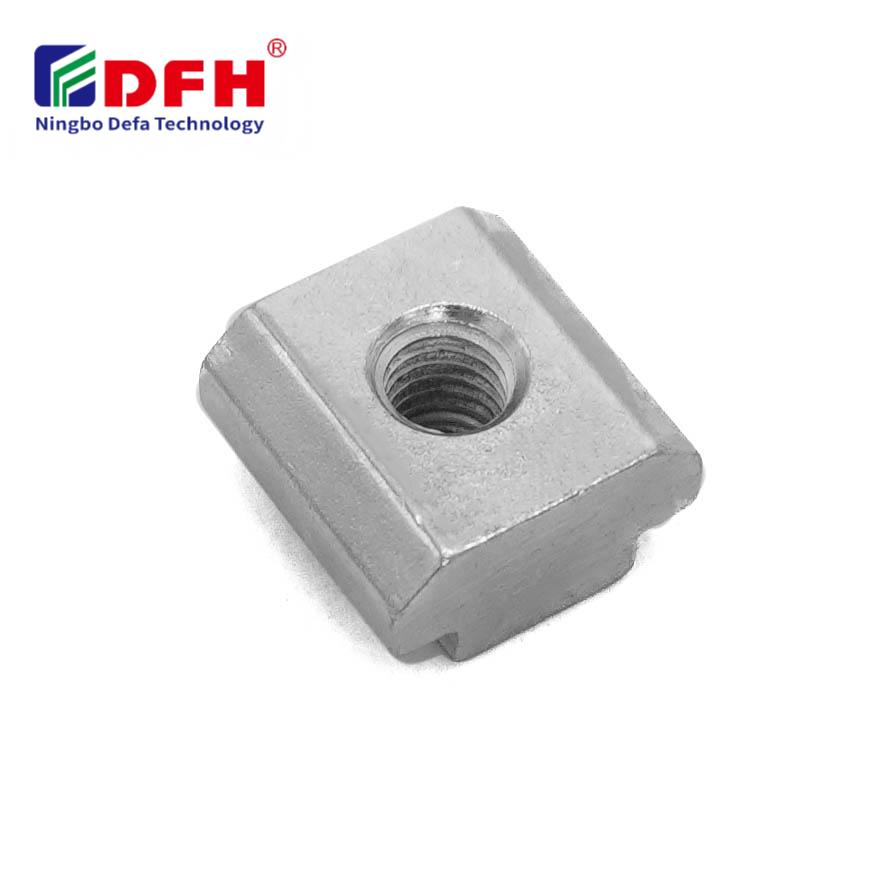
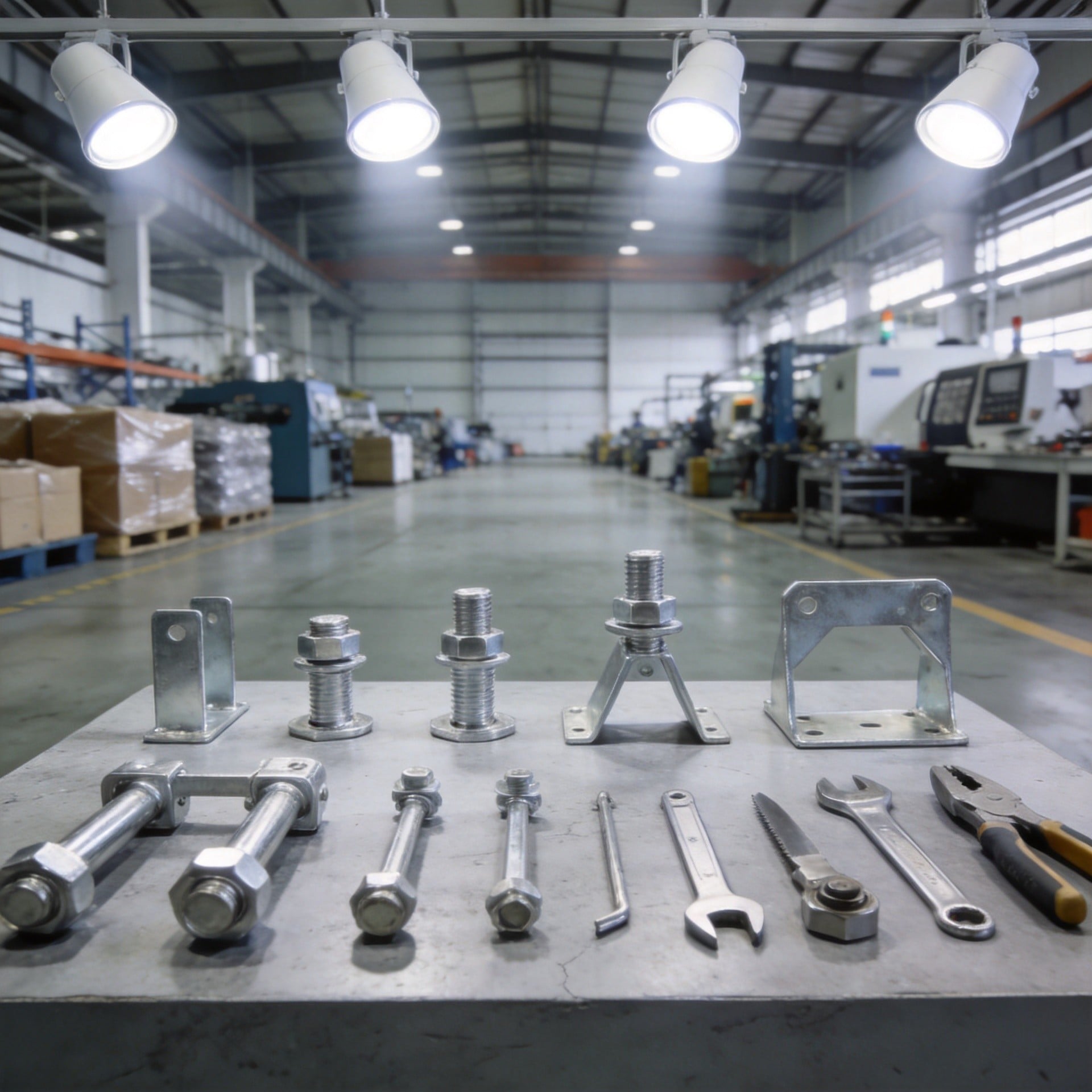
Plate connectors form the backbone of modern industrial design, serving as critical components that bridge structural elements and facilitate load transfer across complex mechanical assemblies. These plate connectors enable engineers to create robust, scalable systems that withstand demanding operational conditions while maintaining design flexibility and modularity.
Understanding where and how plate connectors are deployed across industrial applications helps manufacturers, engineers, and design teams optimize their assembly strategies. From heavy machinery to precision automation systems, these structural fastening solutions provide the reliability and performance that industrial operations demand. This guide explores the primary use cases, industries, and specific applications where plate connectors prove indispensable.
Heavy manufacturing environments rely heavily on structural fastening solutions to assemble steel frames, support columns, and load-bearing beams. Plate connectors act as the primary junction points where multiple structural members converge, distributing forces evenly and preventing stress concentration that could lead to failure. In fabrication plants, these components connect horizontal and vertical members with precision, ensuring dimensional accuracy and structural integrity across the entire assembly.
Bridge construction, industrial warehouses, and large-scale machinery frames all depend on plate connectors to maintain alignment and load distribution during assembly and operation. The bolted or welded connections created by these components allow engineers to design systems with exact load ratings, knowing that the junction will perform predictably under specified conditions. Modular connection systems built around plate connectors also enable faster assembly timelines and reduced fabrication costs.
Pressure vessels and storage tanks require load-bearing junction components that can withstand both internal pressure and external loads without compromise. Plate connectors facilitate the joining of cylindrical shells, end caps, and internal partitions in these critical structures. The careful engineering of these junctions ensures that stress concentrations remain within acceptable limits, meeting stringent safety and pressure ratings.
In petroleum refining, chemical processing, and water treatment facilities, the reliability of plate connectors directly impacts operational safety and regulatory compliance. These structural fastening solutions are engineered to handle cyclic loading, thermal expansion, and environmental corrosion, making them essential for long-service-life applications.
Machine tool manufacturers leverage modular connection systems featuring plate connectors to build flexible, reconfigurable equipment platforms. These load-bearing junction components enable rapid assembly, disassembly, and reconfiguration of tool beds, spindle supports, and work-holding fixtures. The standardized hole patterns and dimensional tolerances of quality plate connectors allow engineers to develop product families where common structural elements can be combined in multiple configurations.
Computer numerical control (CNC) machine centers, grinding equipment, and transfer machinery all benefit from this modularity. When customers require different configurations or capacity upgrades, manufacturers can redeploy or reconfigure existing plate connectors rather than redesigning entire systems. This approach reduces development time and manufacturing costs while improving product lifecycle flexibility.
Industrial automation systems require precise, rigid structural fastening solutions to mount robotic arms, conveyor systems, and vision equipment. Plate connectors provide the foundation for these integrated systems, connecting support beams, mounting plates, and transfer mechanisms. The dimensional stability and repeatability of well-designed modular connection systems ensure that robotic positioning remains accurate throughout extended operational periods.
In automotive assembly lines, semiconductor manufacturing facilities, and food processing plants, plate connectors enable systems integrators to design custom layouts that optimize production flow and equipment utilization. The ability to reconfigure systems without complete structural redesign allows manufacturers to adapt quickly to changing production requirements.
Heating, ventilation, and air conditioning systems use plate connectors to support ductwork, equipment frames, and vibration isolation platforms. These structural fastening solutions must accommodate thermal movement, vibration loads, and environmental conditions while maintaining seal integrity and structural alignment. Load-bearing junction components designed for HVAC applications typically incorporate features that simplify installation and allow for future maintenance or modification.
Building mechanical systems often span multiple floors and require robust connection points at support levels. Plate connectors rated for dynamic loads and thermal cycling provide the reliability needed in these complex integrated systems. Engineering firms specify modular connection systems that allow contractors to adapt designs to field conditions while maintaining structural performance.
Power generation facilities, including fossil fuel, nuclear, and renewable energy installations, depend on plate connectors for equipment mounting, structural support, and load transfer in demanding environments. Turbine generators, heat exchangers, cooling towers, and electrical equipment all require carefully engineered structural fastening solutions that maintain integrity under extreme temperatures, pressures, and operational stresses.
Modular connection systems in power plants enable standardized assembly practices, reducing construction timelines and improving quality consistency. When equipment requires replacement or upgrade, existing plate connectors often facilitate rapid reconfiguration, minimizing downtime and maintenance costs. These load-bearing junction components represent critical infrastructure elements that directly impact facility reliability and economic performance.
Heavy manufacturing, construction, oil and gas, power generation, automotive, aerospace, and process industries depend extensively on structural fastening solutions. Any sector involving large-scale machinery assembly, pressure equipment, or infrastructure construction typically leverages plate connectors as fundamental design components. Load-bearing junction components are particularly critical in industries where equipment failure poses safety or environmental risks.
Modular connection systems reduce design and fabrication time by enabling engineers to standardize interfaces between components. Plate connectors with consistent hole patterns and dimensional specifications allow rapid assembly and reconfiguration. This approach lowers manufacturing costs, accelerates time-to-market for new equipment configurations, and simplifies supply chain management for structural fastening solutions.
Yes, plate connectors function effectively in both assembly methods, though design details vary. Bolted connections using plate connectors allow for disassembly, inspection, and reconfiguration, making them ideal for modular connection systems. Welded applications provide permanent rigid load-bearing junction components suited for structures requiring maximum structural integrity and minimal maintenance access after assembly.
2026/09/30
Source aluminum profiles for versatile modular framing. Learn extrusion mechanics, strength benefits & corrosion resistance. Request details.
2026/09/30
Source aluminum profiles for construction projects. Learn structural framing, cladding & window benefits for maximum ROI. Download guide.
2026/09/30
Source optimal aluminum profile sizing techniques. Evaluate load, space, alloy, environment & cost factors to prevent deflection. Download guide.
2026/09/30
Struggling with fastener failures or rework? Master screw sizing by diameter, pitch, material, and load—plus industry-specific standards. Optimize reliability & compliance now.
2026/09/30
Source aluminum profiles for industrial engineering. Discover strength-to-weight ratios, corrosion resistance & 30% cost savings. Download guide.
2026/09/30
Source heat-resistant aluminum profile systems. Master thermal expansion science & stress management strategies for industrial builds. Download guide.